Business & Farms
Commercial & Farm Solar and Battery Storage in Scotland
Solar PV, battery storage, EV charging and heat pumps for farms, estates and businesses across Scotland, installed through MCS-certified partners.
- Installed through our MCS-certified partners
- Interest-free credit up to £30,000, subject to status
- Local Scottish office in Dundee
Quick answer
We design and install commercial solar PV, battery storage, EV charging and heat pumps for farms, rural estates and businesses across Scotland. Every project starts with a site survey and is installed through MCS-certified partners. Interest-free credit up to £30,000, subject to status.
Last updated: 17 October 2026
Who it is for
Built for sites that use power during the day
Commercial solar works best where electricity demand overlaps with daylight. These are the sites we most often work with.
Farms
Dairy, arable and livestock farms with daytime demand from milking, cooling, drying and workshops.
Rural estates
Estates with multiple buildings, holiday lets and outbuildings that share an energy bill.
Businesses
Offices, retail units and workshops that use most of their electricity during working hours.
Warehouses
Large roofs over storage, logistics and light industrial sites with steady daytime loads.
Hospitality
Hotels, pubs, restaurants and visitor attractions with kitchens, laundry and long opening hours.
Schools
Schools and nurseries where demand peaks in daylight hours during term time.
Community buildings
Village halls, churches and sports clubs looking to reduce running costs.
What we install
One partner for your site's energy
Commercial solar PV
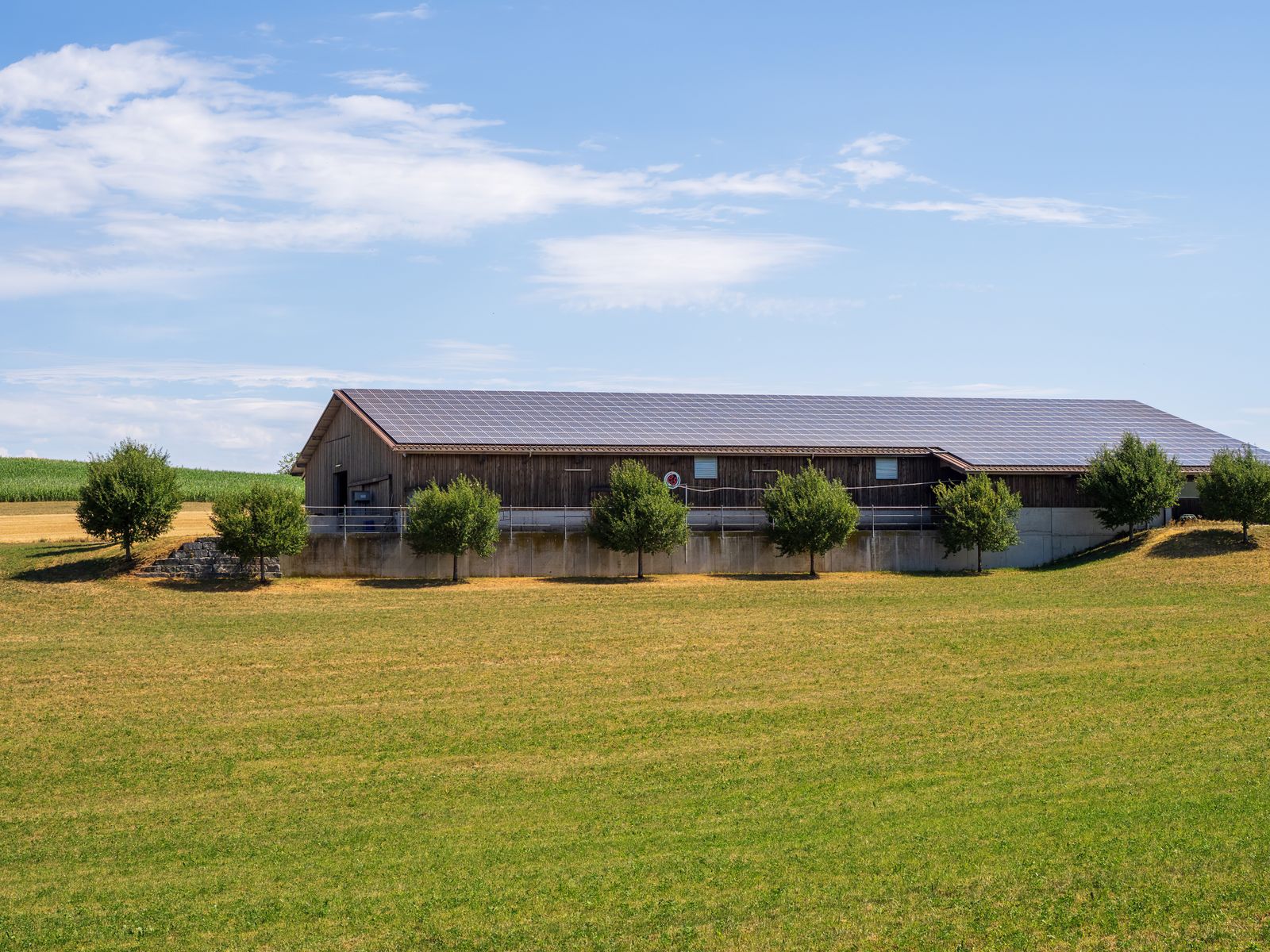
Roof-mounted arrays on barns, sheds, warehouses and commercial buildings, or ground-mounted systems on spare land.
Battery storage
Batteries sized to your site that store surplus solar generation for use later in the day.
EV charging
Charge points for fleet vehicles, staff and visitors, which can make use of your own solar generation.
Heat pumps for larger buildings
Air source heat pumps designed for farmhouses, offices, halls and other larger properties.
How savings work
What decides how much a business saves
Every site is different, so we do not quote savings figures before a survey. These are the factors that shape the result.
Daytime usage
The more electricity you use while the sun is up, the more of your solar generation goes straight into your own operations.
Your tariff
The price you pay per unit sets the value of every unit you no longer buy from the grid. Higher unit rates generally mean a larger saving.
Roof or ground space
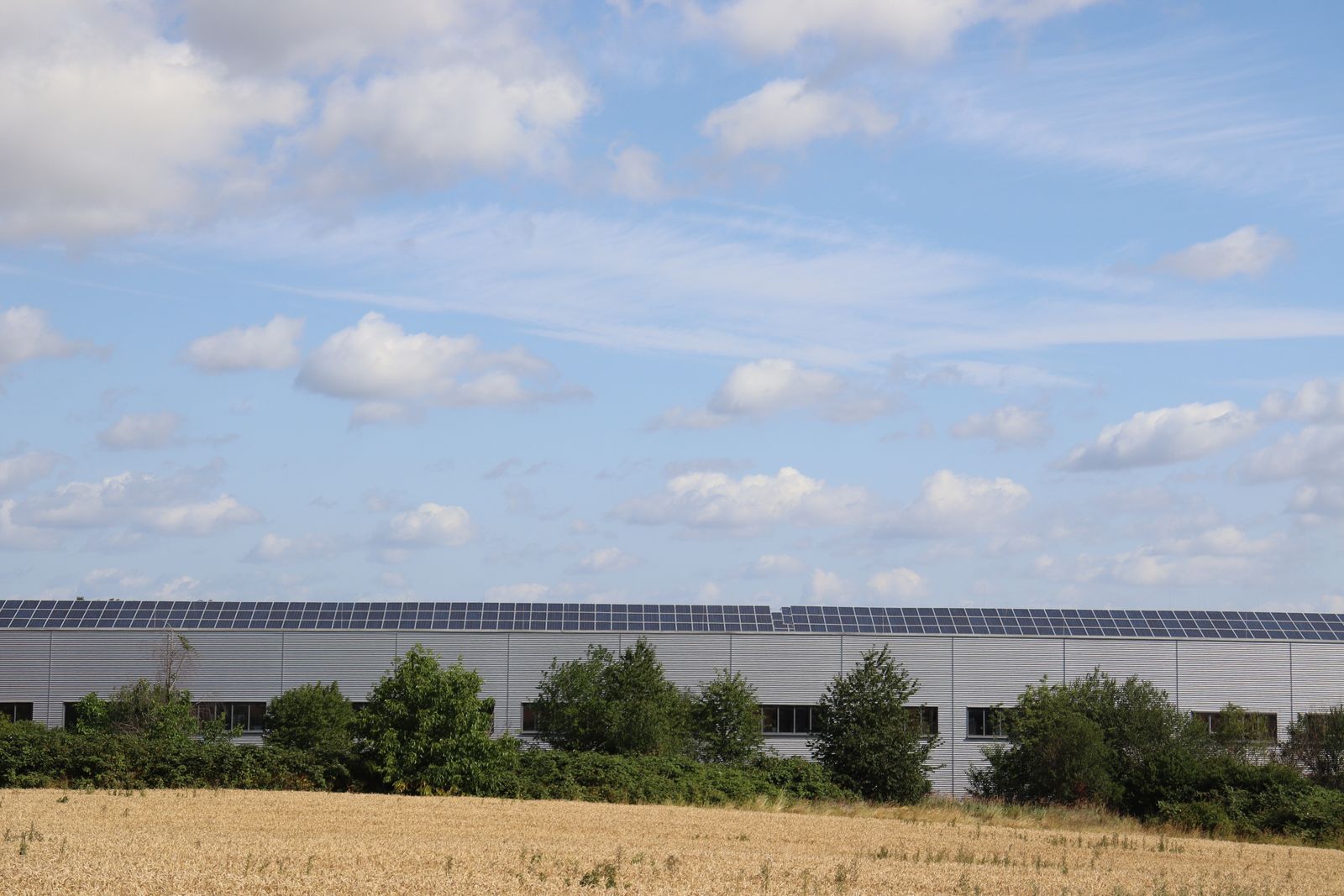
Available roof area, orientation, shading and any spare land determine how large a system your site can take.
Export
Generation you do not use can be exported to the grid under an export tariff, or stored in a battery for use later.
How it works
From survey to aftercare
- Step 1
Site survey
We look at your buildings, land, electrical supply, usage data and any grid connection constraints.
- Step 2
Design
You receive a system design and written quote based on your site and how you use energy.
- Step 3
Installation
Installation is carried out through our MCS-certified partners, planned around your working day.
- Step 4
Aftercare
Commissioning, handover and ongoing support so your system keeps performing as designed.
Interest-free credit up to £30,000, subject to status.
Business and farm solar questions
Solar is usually worth considering for a farm or business that uses most of its electricity during the day. Daytime demand from machinery, cooling, lighting or offices lines up with solar generation, so more of what you generate is used on site. A site survey shows whether your roof or land suits it.
Savings come from buying less electricity from the grid. Solar covers part of your daytime demand, and a battery stores surplus generation for use later in the day. Your actual saving depends on your usage pattern, your tariff, how much roof or ground space you have and any export payments you receive.
Yes, many barns, sheds and warehouses can take solar panels if the roof structure is sound and the orientation is suitable. Older roofs, fragile sheeting or asbestos may need assessing first. Where a roof is not suitable, a ground-mounted array on spare land can be an alternative. A survey confirms the options.
A battery is not essential, but it helps when your site generates more than it uses at certain times. It stores that surplus for use in the evening or early morning instead of exporting it. Whether a battery suits you depends on your usage pattern, tariff and how much you would otherwise export.
The timescale depends on the size of the system and the site. After the survey and design are agreed, smaller farm and business installations can often be completed within days, while larger arrays take longer. Grid connection approval from the network operator can add time, so we plan this in from the start.
Business enquiry
Talk to us about your site
Share a few details and we will arrange a survey of your buildings or land, then send a written, no-obligation proposal.
Call 0141 230 0198Business enquiry
Tell us about your site and we will be in touch to arrange a survey.
No obligation · We install through MCS-certified partners · Farms and businesses across Scotland
- 1
Tell us about your home
Call us or use the quote form. It takes about two minutes.
- 2
Survey
We check your roof, shading, fuse board and electricity use.
- 3
Written quote
Equipment, price and terms in writing, with no obligation.
No-obligation survey
Get a clear, written quote for your home
We look at your roof and electricity use, then send a written quote showing the equipment, the price and the terms, so you can decide in your own time.
- Installed through our MCS-certified partners
- Interest-free credit up to £30,000, subject to status
- Local Scottish office in Dundee