Glossary
Solar and battery terms explained
The terms you will see on this site and in your quote, explained in plain English.
- Installed through our MCS-certified partners
- Interest-free credit up to £30,000, subject to status
- Local Scottish office in Dundee
Quick answer
This glossary explains the technical terms you will meet when looking at solar panels and home batteries in Scotland, from MCS and the Smart Export Guarantee to kWh, depth of discharge and DNO notification. Each definition is short and plain, so you can read your written quote with confidence before deciding anything.
Last updated: 17 October 2026
- MCS
- Microgeneration Certification Scheme. The UK quality mark for renewable energy installations. An MCS certificate is required to claim export tariffs. Check the register at mcscertified.com.
- SEG
- Smart Export Guarantee. The government scheme requiring energy suppliers to pay for electricity exported to the grid. Smart Export Guarantee payments, with rates set by each supplier.
- DNO
- Distribution Network Operator. The company that maintains the electricity network in your area. SP Energy Networks serves central and southern Scotland and SSEN serves the north.
- kWp
- Kilowatt peak. The maximum output of a solar panel under standard test conditions. A 6kWp system has 12 x 500W panels.
- kWh
- Kilowatt hour. One unit of electricity. If you use 1kW for one hour, you use 1kWh. Your bill is measured in kWh.
- EPC
- Energy Performance Certificate. A rating of your home's energy efficiency, graded A to G. Solar panels can help improve your rating.
- G98
- The DNO notification process for generation systems under 3.68kW. Notification only — no approval needed before installation.
- G99
- The DNO application process for generation systems over 3.68kW. Approval must be given before installation begins.
- LiFePO4
- Lithium iron phosphate. The battery chemistry used in modern home batteries. Safer and longer-lasting than older lithium-ion chemistries. Manufacturer-rated at around 8,000 cycles.
- Round-trip efficiency
- The percentage of energy you get back from a battery compared to what you put in. Some energy is always lost in the charge and discharge cycle; the manufacturer's figure for your battery is shown on its datasheet.
- Depth of discharge
- The percentage of a battery's capacity you can use. Our batteries allow 95% depth of discharge, meaning you can use nearly all the stored energy.
- Hybrid inverter
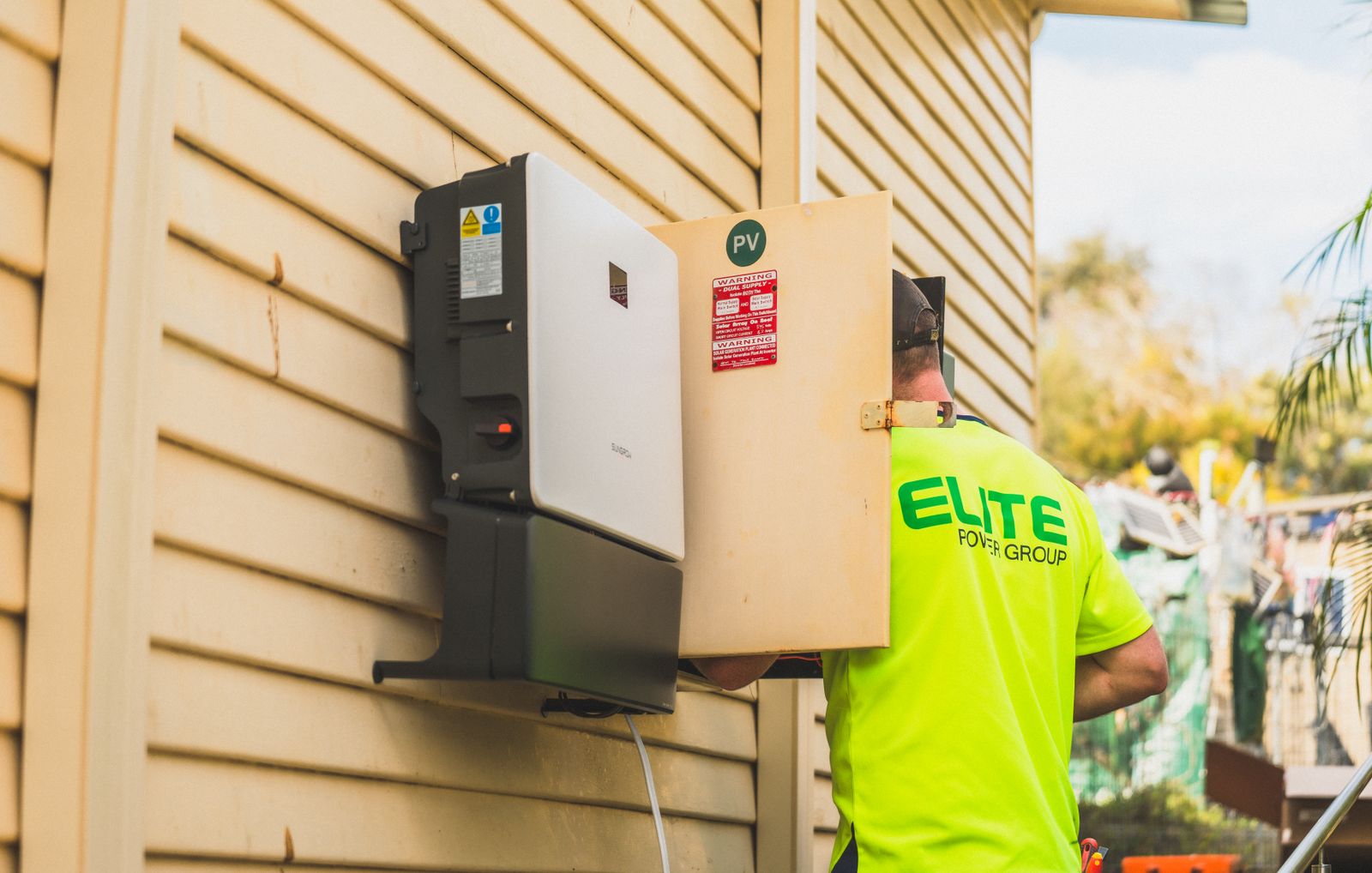
- An inverter that handles both solar generation and battery storage in one unit. Simpler and more efficient than separate components.
- Grid arbitrage
- Charging a battery on cheap overnight electricity and discharging it during peak hours. Whether this suits you depends on your tariff and usage pattern. Our battery storage page explains how it works.
- Permitted development
- Building work that does not require planning permission. Most domestic solar installations are permitted development unless in a conservation area or on a listed building.
- DNO notification
- The process of informing your DNO that you are installing generation equipment. We handle this for you — G98 for systems under 3.68kW, G99 for larger systems.
Related pages
- Battery storage explained — how home batteries work
- Solar panels for Scottish homes — hardware and yield
- Frequently asked questions — straight answers about solar and battery
- The Scottish Solar Index — real generation data from monitored systems
Want this in plain English?
Call us, or request a written, no-obligation quote. No jargon, no pressure.
- 1
Tell us about your home
Call us or use the quote form. It takes about two minutes.
- 2
Survey
We check your roof, shading, fuse board and electricity use.
- 3
Written quote
Equipment, price and terms in writing, with no obligation.
No-obligation survey
Get a clear, written quote for your home
We look at your roof and electricity use, then send a written quote showing the equipment, the price and the terms, so you can decide in your own time.
- Installed through our MCS-certified partners
- Interest-free credit up to £30,000, subject to status
- Local Scottish office in Dundee